Not just a
huge collection of
Shark
Pictures:
Elasmodiver.com contains images of sharks, skates, rays, and a few
chimaera's from around the world. Elasmodiver began as a simple web
based
shark
field guide
to help divers find the best places to encounter the different
species of sharks and rays that live in shallow water but it has
slowly evolved into a much larger project containing information on
all aspects of shark diving and shark photography.
There are
now more than 10,000 shark pictures and sections on shark
evolution, biology, and conservation. There is a large library of
reviewed shark books, a constantly updated shark taxonomy page, a
monster list of shark links, and deeper in the site there are
numerous articles and stories about shark encounters. Elasmodiver is
now so difficult to check for updates, that new information and
pictures are listed on an Elasmodiver Updates Page that can be
accessed here:
Identification:
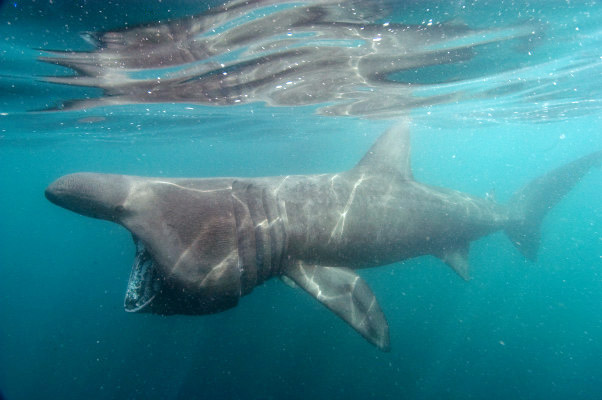
Brown
or slate grey dorsum often with blotches of darker or lighter color forming
vague stripes along flanks. Gill slits extremely long almost meeting on the
underside of head. Mouth cavernous and when opened forms a large circle in which
the dark inner slits of the gills are clearly visible. The Noses of younger
individuals are proportionately longer and visibly sag when the mouth is closed.
First dorsal fin high often breaking the surface. Second dorsal small and close
to tail. Caudal fin large. Upper lobe of caudal fin height is about equal to
first dorsal.
Size:
10
meter specimens have been verified but the maximum length may be as great as 15
meters. 170cm at birth. The
Basking shark is the second largest known fish in the sea.
Habitat:
During the plankton blooms in the summer months Basking Sharks are seen close
inshore feeding on the up welling micro organisms. Schools are also
observed offshore. It is somewhat of a mystery where the sharks travel to at
other times of year. Baskers have been accidentally caught in trawls during the
winter months in the same areas that they are seen in the summer. At this time
they have shed their gill rakers and it can be assumed that they are not
feeding. It has been suggested that they lay in a state of torpor on the seabed
waiting for the next wave of plankton in the spring. Other theories include the
idea that they follow the warmer currents towards the equator as the
temperatures decline.
Abundance
and distribution: Circumtemperate
although some localised populations have been hunted to near extinction.
Behavior:Filters plankton. Individuals are more commonly seen now due to
decrease numbers but schools of a few hundred sharks were once regularly
encountered. Author and shark fisherman Gavin Maxwell reported back in the
1950's that he once looked down into a school that was many sharks
deep.
Reproduction:
Presumed
ovoviviparous. Females have one functional ovary which may contain as
many as 6 million eggs. Mating has not been witnessed but scars in the vagina
suggest that mating may occur multiple times during the year. In suspected
courtship displays the male has been observed following the female for long
periods of time.
Observations:When viewed from above water the Basking shark's dorsal and caudal fins give the impression
of two sharks moving together. When one shark follows another it is not surprising
that the resulting line of 4 snaking fins look like the images conjured up
of sea monsters.
Photographs:
The
Lizard Peninsula, Cornwall, UK.
Similar species:
Basking sharks are regularly misidentified as white sharks which maintain a
higher profile in the publics collective consciousness.
Reaction to divers:Baskers are very sensitive to bubbles.
Consequently most interaction happens on snorkel. Even kicking toward them on
the surface is enough to make them change course. Slow non threatening
movements will receive the best results but this is often not possible whilst
trying to keep up with a shark swimming along at 3 or 4 knots! The best way to
photograph basking sharks may be on rebreather whilst holding onto a scooter to gain
ideal position.
Diving
logistics:
The
only dedicated basking shark trips are organized by Porthkerris
Divers. They are
situated east of the Lizard Peninsula in Southern Cornwall, UK. Mike Anselmi
Owner and Captain of the Celtic Cat, takes photographers and snorkellers out to
where the sharks can be seen. The season for these encounters is very short,
usually no longer than a month and even during this time the sharks are not
guaranteed. The sharks show up on this part of the coast around late April and
are gone by early June. Occasionally a second bloom of plankton draws them back
for a second feeding but this is rare.
The
Basking Shark Society was known to run encounters out of the Isle of Man but I
have been unable to coax a response from the society on the availability of
trips.
Other diving locations submitted by
readers: Reports of frequent sightings off Massachusetts and the New England
coast have been steadily growing. This area will probably yield some good
encounters for snorkellers in the future.