|
|
|
SHARK INFO |
|
SHARK |
|
SHARK EVOLUTION |
|
|
|
SHARK DIVING |
|
SHARK DIVING 101 |
|
|
|
CONSERVATION |
|
|
|
PHOTOGRAPHY |
|
SHARK PHOTO TIPS |
|
|
|
RESOURCES |
|
|
|
WEB STUFF |
|
WHAT IS ELASMODIVER? Not just a huge collection of Shark Pictures: Elasmodiver.com contains images of sharks, skates, rays, and a few chimaera's from around the world. Elasmodiver began as a simple web based shark field guide to help divers find the best places to encounter the different species of sharks and rays that live in shallow water but it has slowly evolved into a much larger project containing information on all aspects of shark diving and shark photography. There are now more than 10,000 shark pictures and sections on shark evolution, biology, and conservation. There is a large library of reviewed shark books, a constantly updated shark taxonomy page, a monster list of shark links, and deeper in the site there are numerous articles and stories about shark encounters. Elasmodiver is now so difficult to check for updates, that new information and pictures are listed on an Elasmodiver Updates Page that can be accessed here:
|
|
_ |
|
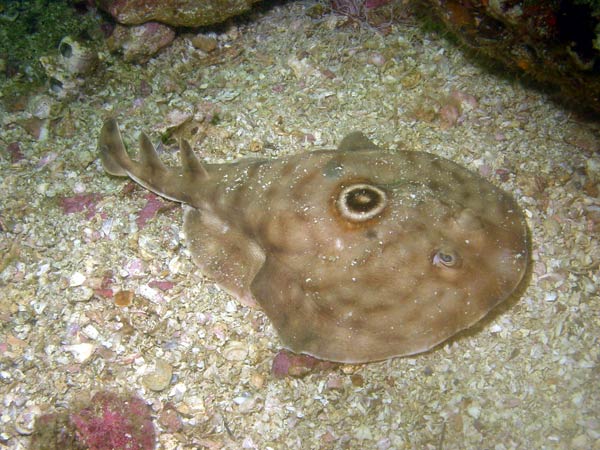
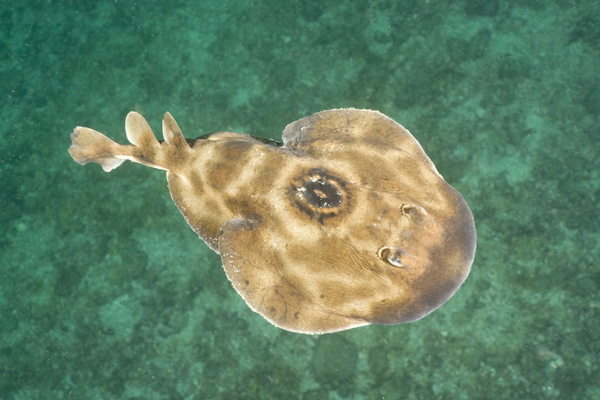
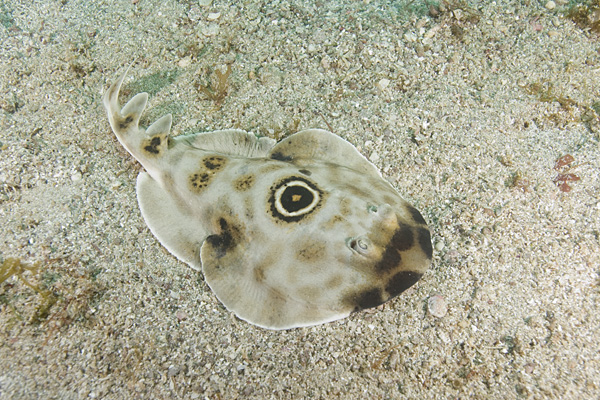
Bullseye Electric Ray |
|
Photographer Andy Murch View all Bullseye Electric Ray Pictures in the Shark Pictures Database Bulls-eye electric ray. Latin Name: Diplobatus ommata Family: Narcinidae Identification: Disc oval and with pelvic fins give an overall teardrop body shape. 2 dorsal fins present spaced evenly along the tail and well developed upper caudal. Caudal fins fan shaped. Dorsum brown with indistinct blotches and conspicuous eyespot in centre. Area in front of eyes sometimes has bolder markings in the form of symmetrical blotches. Ventrum pale. Size: Length 7.9" max. 9.8" Habitat: Sandy areas near rocky reefs. From intertidal to 211ft. Abundance and distribution: From Panama to the Sea of Cortez. Behavior: Nocturnal. Moves over bottom at night, resting on fin tips. Diet consists mainly of amphipods, shrimp, and worms. Reproduction: Ovoviviparous. Observations: Photographs: Roca Sucia, las Islas Catalinas, Costa Rica. Similar species: Cortez electric ray. No eyespot. Reaction to divers: Easily approached. I found this species to be very lethargic during the day allowing me to take close up photographs. No attempt was made to shock. Diving logistics: Agua Rica Dive Shop runs charters out to the Catalinas. Companies in Playas del Coco in the north also go to this group of small islands. Also on the hit list in this area are whitetip reef sharks, schooling Cownose rays, and Round stingrays. Other diving locations submitted by readers: References:
HOME
LINKS TAXONOMY
BOOKS CONTACT
|
|
|
|
SHARK TRIPS |
 |
 |
 |
 |
 |
 |
 |
 |
|
MORE EXPEDITIONS |
 |
 |
 |
 |
 |
 |
 |
 |
 |
 |
 |
 |
|
|
|
SPONSORS |
 |
 |
|
ADVERTISERS |
|
|


|
|
|
ELASMO-BLOGS |
 |
 |
 |
 |
 |